


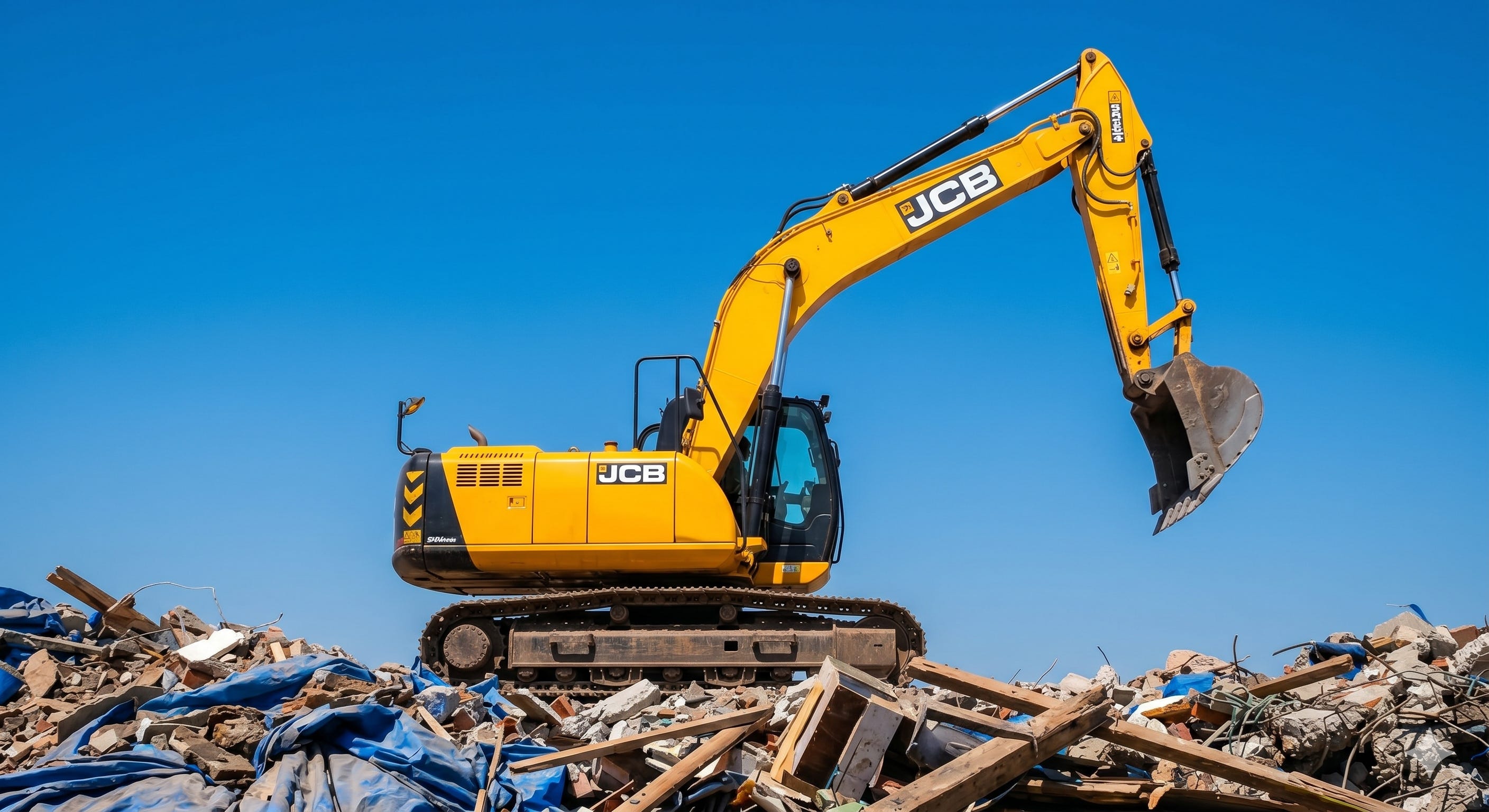
Mumbai has begun clearing the slums, and rightly so. However, it is important to understand why slums form so that we can prevent them from emerging in the future. To that end, we have to answer five questions:
1. Why slums form?
2. How do they contribute to the economy?
3. Why should they be demolished?
4. What should replace them?
5. How to ensure they do not come up again?
Let’s dive in.
Why slums form?
There are many reasons for slum formation, but they reduce to four:
1. Rural-to-urban migration running faster than supply of affordable housing.
Urban migrants make a choice between urban incomes coupled with high-cost urban life OR rural incomes with relatively lower-cost rural life. They pick urban because the income gap is wide enough to absorb the cost gap.
As migration increases, the cost of urban life rises and rent dominates the household budget. The gap between what the migrant can pay and what legal housing costs is closed through encroachment — aided by predatory politics, mafia, and pliant law enforcement.
If the income gap between rural and urban areas AND the gap in number of job opportunities were to shrink, slum formation would decline.
Two distinct problems hide inside this one. One, lack of opportunities outside the city. Two, lack of legal affordable housing inside the city. Most policy responses tackle only one.
2. Inappropriate policy incentives.
The Slum Redevelopment Act allows developers additional Floor Space Index (FSI) when they undertake slum rehabilitation. While sound in principle, in practice it is often misused to encourage encroachments.
To understand why, ask the WIIFM question for every stakeholder. [WIIFM = What’s in it for me?]
For the squatter: a hutment can eventually be upgraded into a built unit that can be sold for a serious profit.
For the developer: rehab participation comes with fungible FSI that can be loaded into a high-end tower in the same project. The gap between construction cost per square foot and the high-end sale price is so wide that creating a slum and then redeveloping it is a profitable business plan.
Individual developers cannot manufacture slums on their own. Politicians, illegal manufacturing cartels, hawker mafias, and pliant officers all chip in. That is why the equilibrium holds. The Slum Rehabilitation Authority’s own track record — a completion rate below 13% over 27 years, with most rehab units undersized and poorly maintained — is the visible cost of this design.
3. Low-cost housing versus slum redevelopment.
Compare the costs and incentives of a developer building low-cost housing versus one doing slum redevelopment.
Land cost is decisive in a megacity like Mumbai — SRA projects have near-zero land cost (the land was encroached) while legitimate low-cost housing needs high-cost land.
Governments are tweaking FSI rules for low-cost housing to align incentives. But in real estate, location decides price. Projects get redesigned so that multiple units are bought by middle and higher-income households, and the low-income buyer ends up without affordable housing anyway. PMAY-U has built millions of units but the in-situ slum redevelopment vertical has consistently under-delivered for exactly this reason.
4. Demographic jihad.
One factor driving illegal slums and encroachments is deliberate demographic engineering. Poor Muslim families, including foreigners (Bangladeshi and Rohingya infiltration cases have been documented by NIA and state police across Mumbai, Delhi, and the North-East), are settled in strategically chosen pockets — near critical infrastructure, vote-decisive constituencies, or border areas. The objective is not economic, it is to scuttle the law-and-order machinery in the chosen locality and reshape the electorate. National security agencies need to take this seriously. I fear it is already past the point at which it could be quietly contained.
How do they contribute to the economy?
Slums’ contribution to the city economy is rarely recognised, partly because so much of it is informal. But it is real. India’s informal sector is roughly 50% of GDP and over 90% of total employment (NCEUS; ILO 2019). Dharavi alone — 2.4 sq km, 1+ million people — hosts 20,000+ enterprises and generates an estimated USD 1–1.5 billion in annual output. We are not talking about a marginal economy.
1. Slums are the source of cheap labour.
The labour that does the inconvenient and undesirable work — garbage pick-up, sewage maintenance, recycling — comes from these slums. Most of these workers are exploited by middlemen and contractors.
They also supply the services every middle-class household has now built its lifestyle around — delivery riders, drivers and cabs, household help, janitorial and cleaning staff, security guards. The middle-class cost of living in Mumbai is sustained by this invisible subsidy.
2. Slums hide illegal factories that require substantial manual labour.
Many of these are low-cost manufacturing units driven purely by private profit motives.
Many of these factories are involved in illegal manufacture, drugs, or polluting activities (leather, dyeing, plastics) and therefore need to be regulated, not romanticised. Bringing them into the legal net is part of fixing the wider ease-of-doing-business problem I have written about in the context of illegal hawkers.
3. Slums also contain semi-formal supply-chain depots.
Bulk-breaking, sorting, and transhipment activities happen inside slums at very low cost. This reduces the cost of getting goods to the rest of the city. It is genuine social value — even if the underlying setup is illegal.
So the honest framing is this. Slums subsidise the cost structure of the city in the short run. In the long run they sit on the city’s productivity ceiling — because the same residents whose cheap labour you depend on are stuck in a poverty trap of insecure tenure, poor schooling, and worse health outcomes. This is what Marx, Stoker and Suri (MIT, 2013) called the policy trap.
Why should they be demolished?
Many people sense intuitively that slums have to go but the reasons are not always articulated. Let me articulate them.
1. Reward law-abiding citizens; penalise law-breaking. This is the foundational incentive structure of a functioning state. Slums invert it.
A slum dweller is competing with a law-abiding citizen who lives 30 minutes or more away, pays full rent for legal accommodation, and pays for the commute as well. The cost of being legal is much higher than the cost of being illegal. This is unfair.
I have always said: in India, the cost of complying with the law is high and the benefits are low; the cost of breaking the law is low and the benefits are high. If we want a law-abiding society, we have to flip this — put a real penalty on those who break the law, and a real reward on those who don’t. Slum dwellers cannot be allowed to enjoy a permanent cost advantage over law-abiding citizens, or we have given up on the rule of law itself. This is exactly the argument I made in the Police Officer at every corner piece — law and order is the first step toward real development.
2. Slums contradict urban design.
Many experts now prefer in-situ rehabilitation of slum-dwellers. I think this defeats the purpose. You cannot rebuild the city’s spatial logic if the slum footprint is frozen in place.
Slums occupy land where critical infrastructure needs to come and then become a permanent hindrance. Mumbai airport’s development was choked for decades by surrounding slums, notwithstanding the security risk those slums pose to aircraft. The Eastern Freeway, the Western Express, every major transit-corridor project — all carry the same scar.
Urban development is a feedback-loop system. If you let a slum transform into a regularised residential block, you have changed the city’s development map. The consequences propagate outward — traffic, lost development potential of legal areas, distorted commercial rents.
3. Economic distortion
Slums prevent economic activity from moving to other parts of the country. By keeping Mumbai’s cost advantage artificially intact, slums hold capital in Mumbai that should have helped build cities in Bihar, eastern UP, and the rest. The result is more income polarisation, more political backlash. This is what I had written back in 2005 in: Why Bihar should ensure there are no slums in Mumbai? (2005)
What should replace them?
It follows from the above what should — and should not — replace demolished slums.
1. Replace the population mix, not just the buildings.
Planners need to think about the income profile of the area. The ratio of low-income, middle-income and high-income households was doing real work in the local economy. If we just clear the slum and build only middle and high-income towers, we create a structural gap — domestic workers, drivers, delivery riders, sanitary workers have nowhere to live within reach of the jobs.
Transit-oriented planning calls this the X:Y rule — for every X high-income household you add, you also plan for Y low-income service households. The 2023 piece on Limiting growth of cities? makes the same point: housing supply has to be planned by income mix, not by sale price.
2. Replace the supply-chain function with legal alternatives.
The supply-chain depots inside the slum kept Mumbai’s cost of goods down. If we demolish them without a legal replacement, costs rise across the city.
The replacement is dedicated, planned, legal-zoned bulk-breaking and logistics areas — at the edge of the dense city, served by transit, with one-window licensing. The same logic applies to small-scale repair and refurbishment activity that today happens in slums.
3. Replace illegal informality with cheap, fast legality at the bottom of the pyramid.
This is the conclusion I came to in The story of illegal hawkers (2022). The reason informality persists is that being legal is too expensive and too slow. Fix that — and you do not have to fight informality, you starve it. The Street Vendors Act 2014, combined with ONDC, is the architecture; what is missing is implementation.
Unlike the standard story, poor people are willing to pay a fair price for a legally sound shop, residence, or service. They just cannot afford the bribe, the delay, and the harassment that today come with being legal.
4. Public housing at scale — some learn from Singapore, Indonesia not from SRA.
Singapore went from 90% slum housing in 1960 to 90% home-ownership in HDB units within a generation, on the back of compulsory land acquisition, CPF-financed mortgages, and a state that treated housing as nation-building.
Indonesia’s Kampung Improvement Programme upgraded conditions for five million urban poor between the 1960s and 1980s — and a 2024 evaluation finds those kampungs now have higher formal-sector employment and school enrolment than matched controls.
The lesson is not to copy either model — it is to copy the seriousness. India’s PMAY-U has scale. What it needs is design discipline.
How to ensure they do not come up again?
Slums are the confluence of three things — (a) lack of opportunities outside the cities, (b) inadequate supply of affordable legal accommodation inside the city, AND (c) an ineffective law-and-order system. Prevention has to attack all three.
1. Opportunities outside the cities. This is mostly outside the scope of city administration. It depends on state and central policy — power, roads, port and airport access, ease of doing business in tier-2 and tier-3 cities. The Bihar argument I made in 2005 is essentially a call for this: it is in Bihar’s interest, even more than Mumbai’s, that the slum-formation pull weakens.
2. Affordable housing inside the city. This is squarely within city administration’s remit. It is a second-order problem and most city administrators do not understand it. What we need is structural — FSI reform, single-window approvals, digitised land records, rental public housing alongside the ownership push.
Another aspect of Affordable housing is Affordability threshold. Slums are a symptom citizens having means below the affordability threshold. It results in the homelessness we see in developed country cities. It relates more to jobs and labour mobility and deserves a separate research paper to itself.
Finally, we also need information sharing between cities. A Reddit-like platform for civic officials, planners, and informed citizens — anonymised where needed — where one city’s solution to a sewage-billing problem becomes another city’s reference within a week, not within a five-year report. Most municipal innovation in India happens in isolation and dies in isolation.
3. Law and order. A weak law-and-order machinery follows from an ineffective polity. Fixing the politics is more social change than regulatory change.
Police reform on the lines successive commissions have already recommended — separation of investigation from law-and-order duty, magistrate-level accountability, digitised low-discretion enforcement, an end to the 1861 Police Act. Without this, more police simply means more rent extraction. With it, an omnipresent constable becomes a precondition for orderly urban development — exactly what I argued in Police Officer at every corner.
Active citizenry. Politicians respond to incentives. If the local residents’ association can mount a public, named, sustained campaign against any new encroachment, the equilibrium shifts. Most encroachments are tested first — if they meet no resistance in week one, week two becomes a building.
Connect the dots between Encroachments and corruption, illegal hawkers, and slums. They are not separate problems. They are the same problem in different uniforms — the high cost of legality, paid by the citizen and pocketed by everyone in the chain that gatekeeps it.
In Sum
Slums are not the problem - they are the symptom of state-capacity which is the real problem. Fix the state — at the municipal level, in policing, in land records, in business registration — and the slum problem becomes tractable. Mumbai is starting to clear its slums. Lets fix what creates slums in the first place.
Notes and Related reading
Why Bihar should ensure there are no slums in Mumbai? — Rahul Deodhar (2005)
UN-Habitat — The Challenge of Slums: Global Report on Human Settlements 2003
Marx, Stoker & Suri — The Economics of Slums in the Developing World (JEP 2013)
Acemoglu, Johnson & Robinson — The Colonial Origins of Comparative Development (AER 2001)
Galiani & Schargrodsky — Property Rights for the Poor (JPubE 2010)
Jaideep et al. — Demolition, forced evictions and wellbeing in the city (IDMC 2019)
Citizen Matters — 27 years on, Mumbai’s SRA has failed to deliver
ORF — Strengthening Urban India’s Informal Economy: Street Vending
Auerbach — Neighborhood Associations and the Urban Poor (World Development 2017)
Duranton — Growing through Cities in Developing Countries (World Bank 2016)
Political will exists to spend money on housing and urban infrastructure, but there appears to be less willingness to undertake the deeper governance and land-market reforms that are necessary to prevent the continued growth of informal settlements and slums.
Slums persist because politicians don’t want to lose elections.