


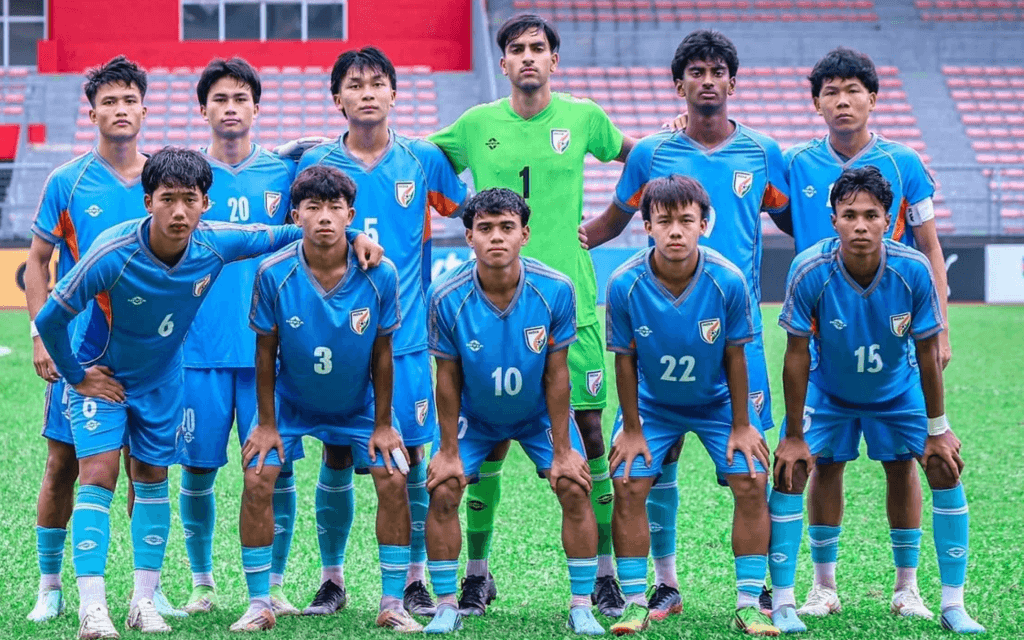
On 17 November 2026, India’s U-17 Football side went against Palestine in Kuala Lumpur in an AFC U-17 Asian Cup 2027 qualifier. The match itself was messy off the pitch—an early red card for a Palestinian player who kicked an Indian opponent on the ground, and an alleged racist gesture toward Gangte that drew an official AIFF complaint to the AFC.
Yet our boys came through. The Blue Colts scored through Kamgouhao Doungel (8’), Ningthoujam Mukundo Singh (52’), captain Dallalmuon Gangte (59’), and Zoramdinthara (89’). Palestine equalised from the penalty spot before half-time, but India dominated after a rain delay and finished the job against ten men following an early red card. The result left India top of Group E and one point away from securing a place in the continental tournament.
It was absolute cinema - a group of teenagers produced a clinical second-half performance under difficult conditions. Moments such as these have the seed to expand the game all across the country. Here is a team showing promise, aggression and there are future stars in that line-up.
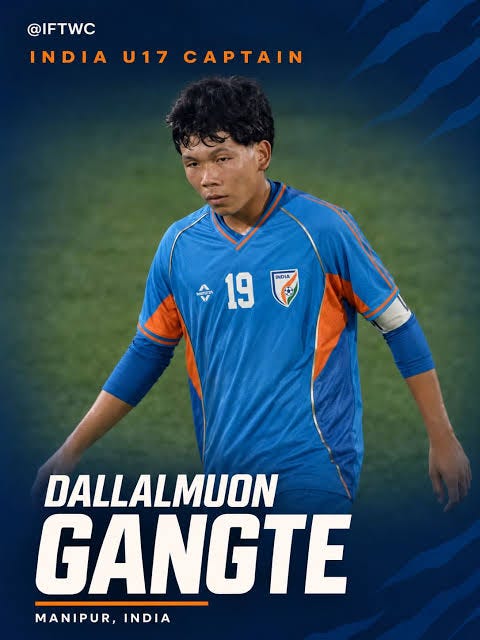
But we need to catch such moments!
Sports grow when they produce visible champions. Champions, in turn, need consistent exposure. Exposure comes from two things: reliable performance data that scouts, journalists, and fans can follow, and presentability—the ability to package a player’s story and style so it travels.
Recent examples from other sports illustrate the point. Para-archer Sheetal Devi is youngest Paralympic medalist, gold medalist at World Champion, Asian championships and a remarkable athlete. Anahat Singh a young Indian squash player has gained rapid profile through junior world titles, Commonwealth and Asian Games appearances, and sustained media attention.
Both have exceptional performance, presentability and are media friendly. It shows how performance +presentation as a complete package creates distinctive presentation reaching far beyond specialist audiences.
If you note how other sports got popular, a template emerges. Even Indian women’s cricket team came up through champions with complete package. Conversely, Indian Kabaddi and other sports leagues are waiting for their champions to be discovered.
Indian football and hockey sit in a different place. Both sports have deep talent pools and, in hockey’s case, a strong recent international record. Football has produced results like this U-17 campaign (India scored 20 goals across three group matches while conceding only three). Yet the players remain relatively invisible to a wider audience once the final whistle blows.
But tracking them is not easy yet; turning that tracking into sustained promotion is. Clubs, the AIFF, Hockey India, and media outlets already possess the basic infrastructure. What is often missing is the deliberate step of treating promising performers as future stars rather than as temporary age-group names.
The practical steps are straightforward.
First improve the website - AIFF and Hockey India both need to revamp their websites and take inspiration from CricInfo - we need player stats and other data for the specialist audiences, the true connoisseurs of the game.
Publish and highlight individual performance data more consistently across platforms. Feature players in short, accessible profiles that combine stats with personality.
Use social media and broadcast packages to show the same sequences that data sites already log—Gangte’s movement, Mukundo’s finishing, a young hockey player’s stick work.
When a team produces a result like the 4-1 in Kuala Lumpur, the follow-up should include named players with numbers and context, not only the scoreline and the controversies.
Give the youngsters media training as well.
Games need champions. Champions need exposure. Exposure is built from accessible performance data and deliberate presentability. India’s U-17 side has just demonstrated, once again, that the talent is there. Making those players easier to follow and more visible is the logical next step if football and hockey are to convert occasional strong results into a larger, more sustained following.
Time to bring sport to the front and centre of our entertainment universe.